Combination Kits packaging
- Modular configuration for individual kit assemblies
- Precise feeding and positioning of all components
- Integration of inspection, labeling, and leaflet insertion
- GMP- and FDA-compliant line design
- Future-proof machine architecture for new requirements
Special features
of Combination Kits
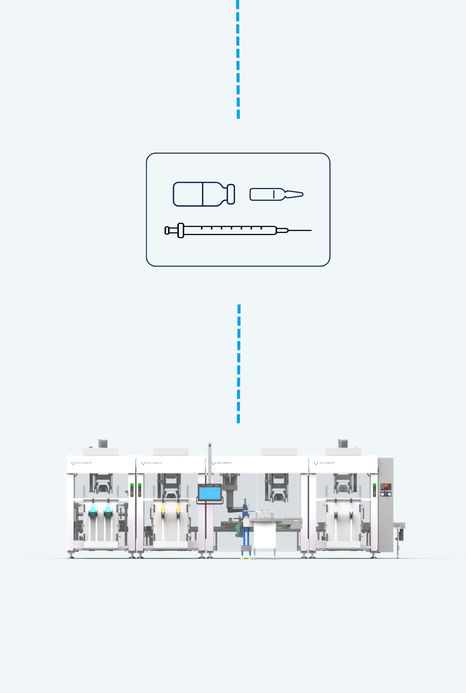
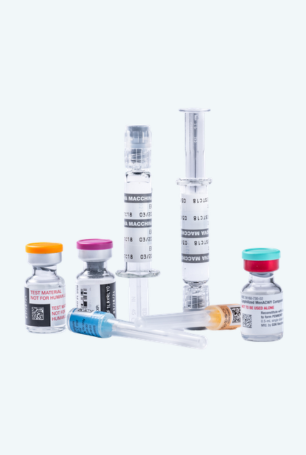
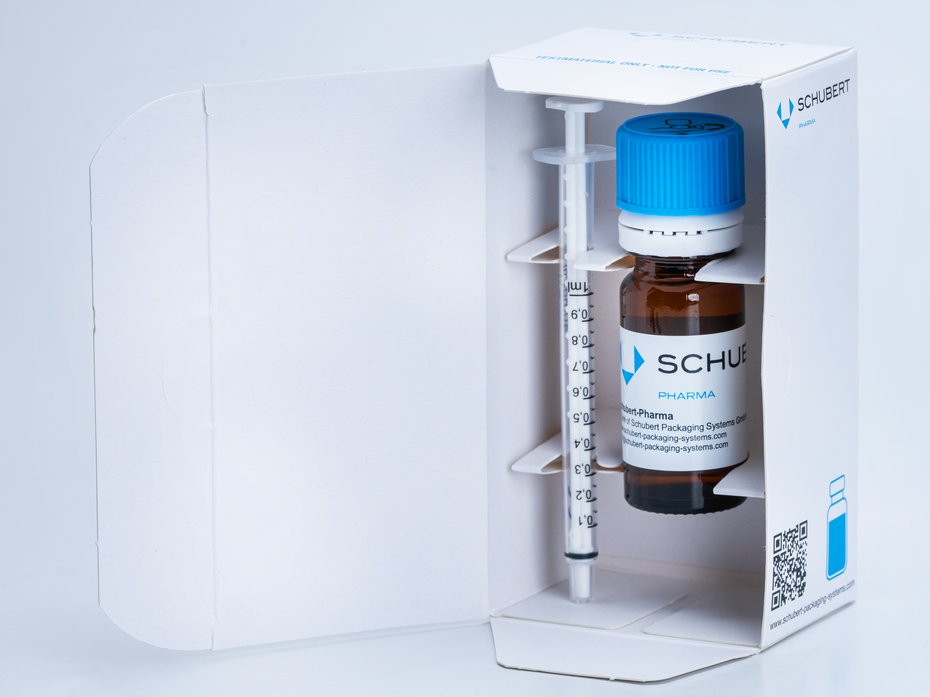
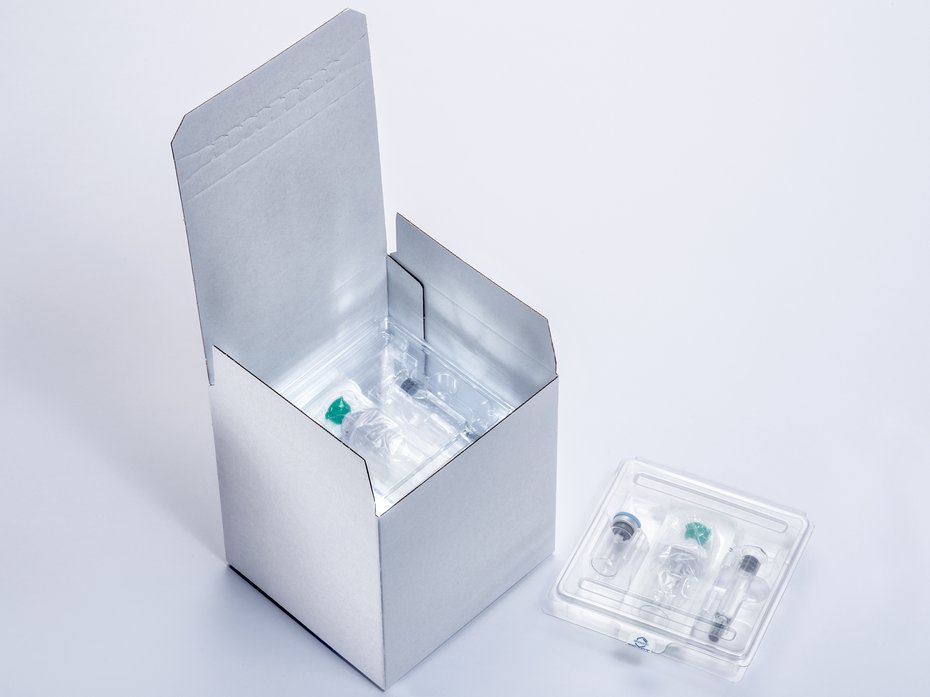
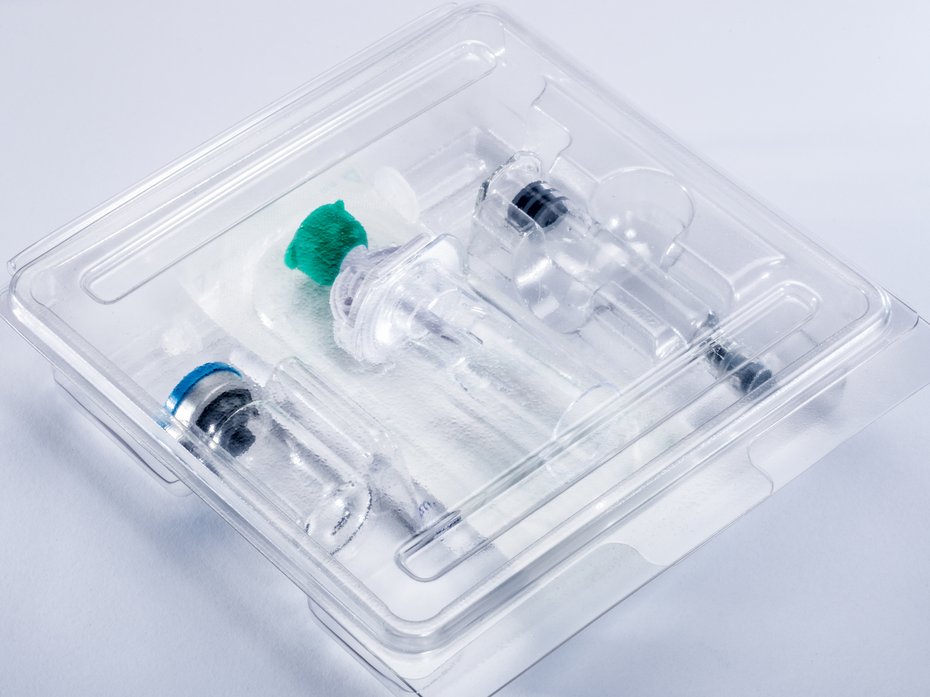
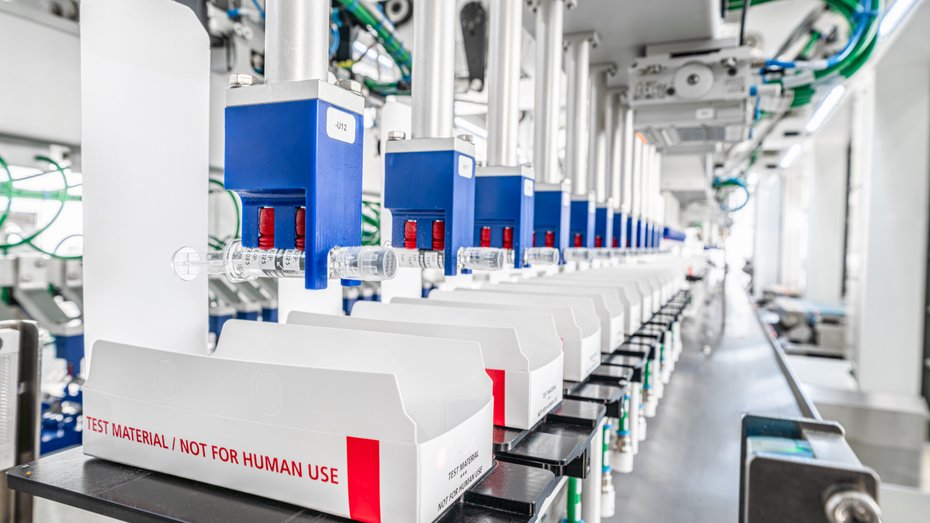
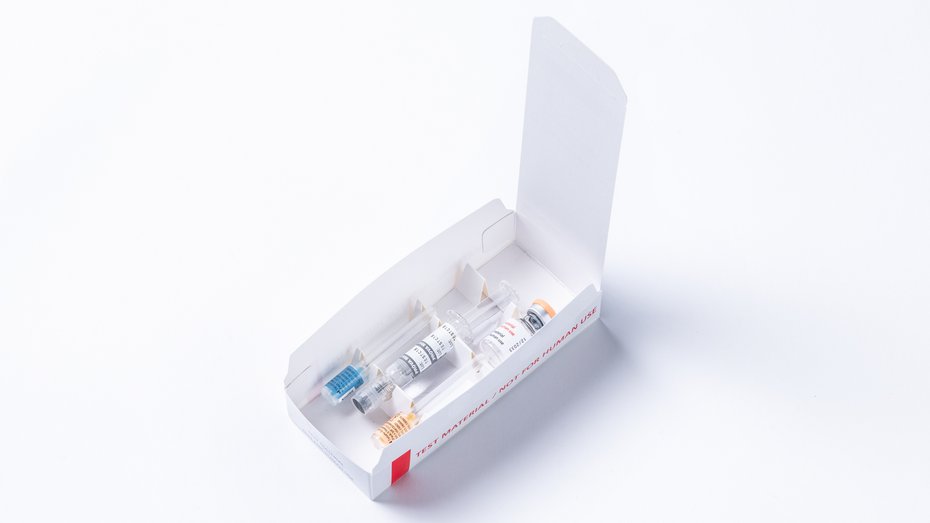
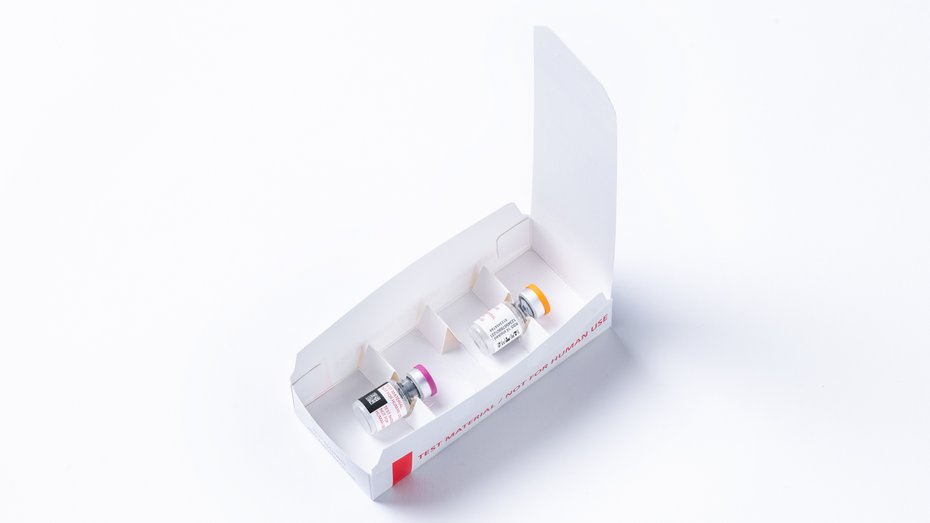
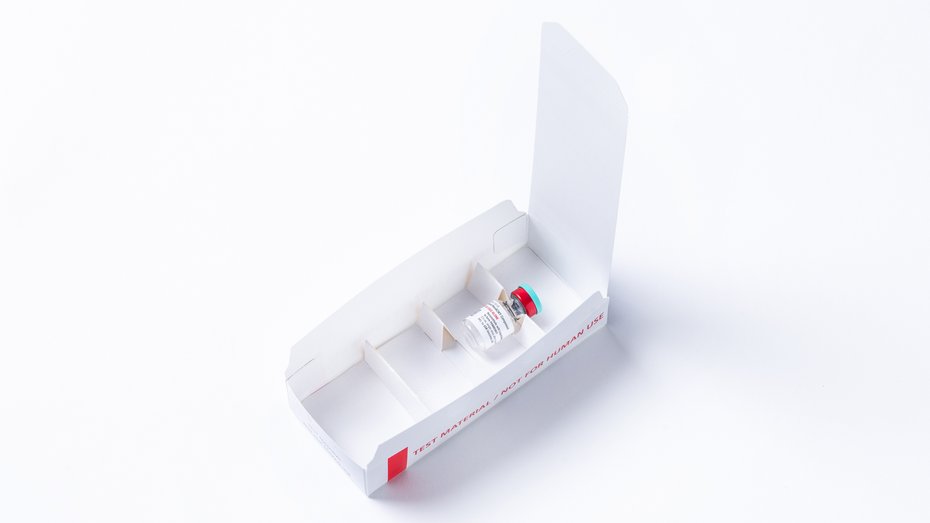
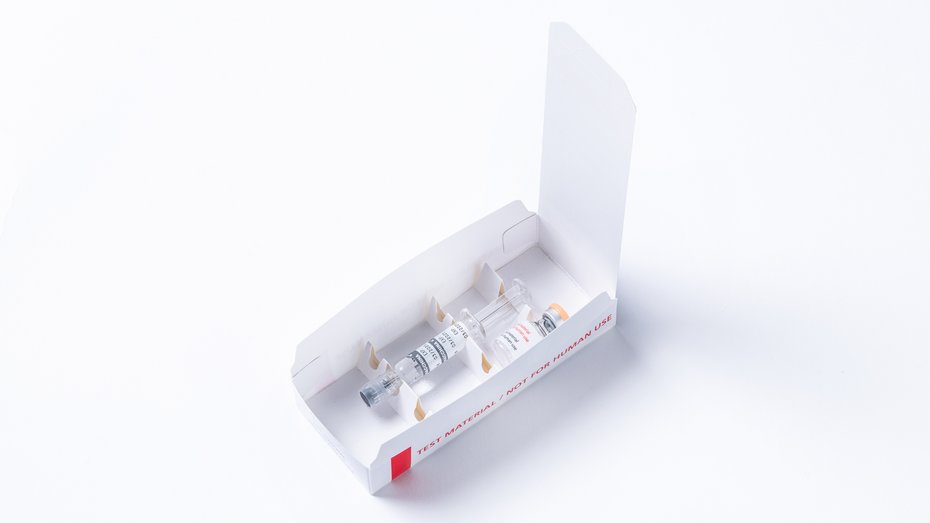
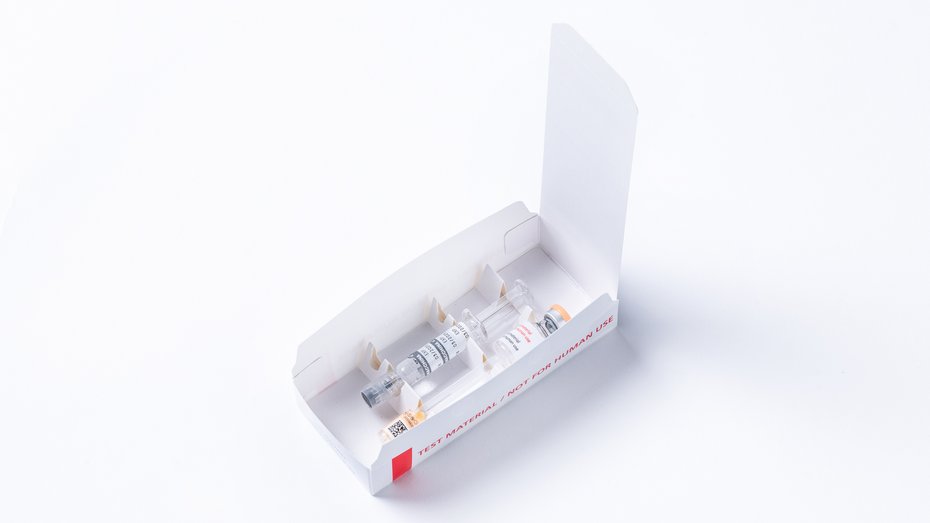
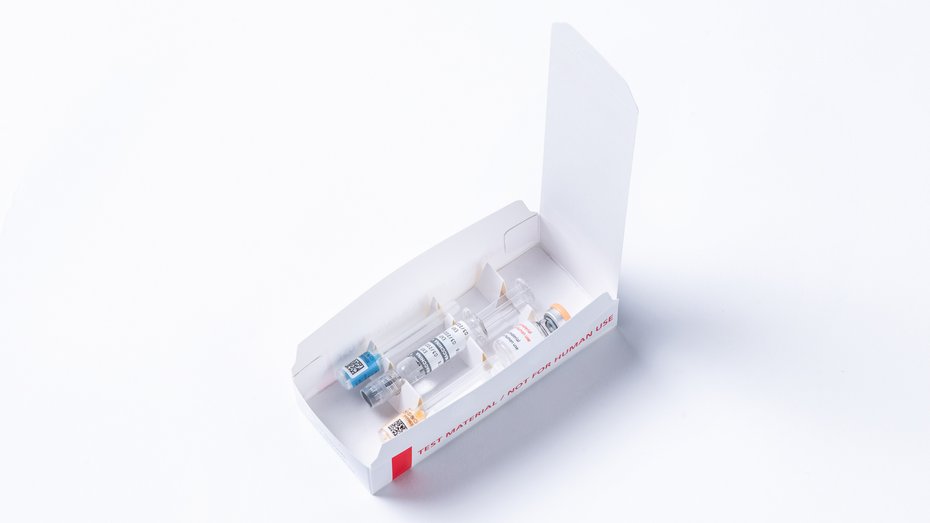
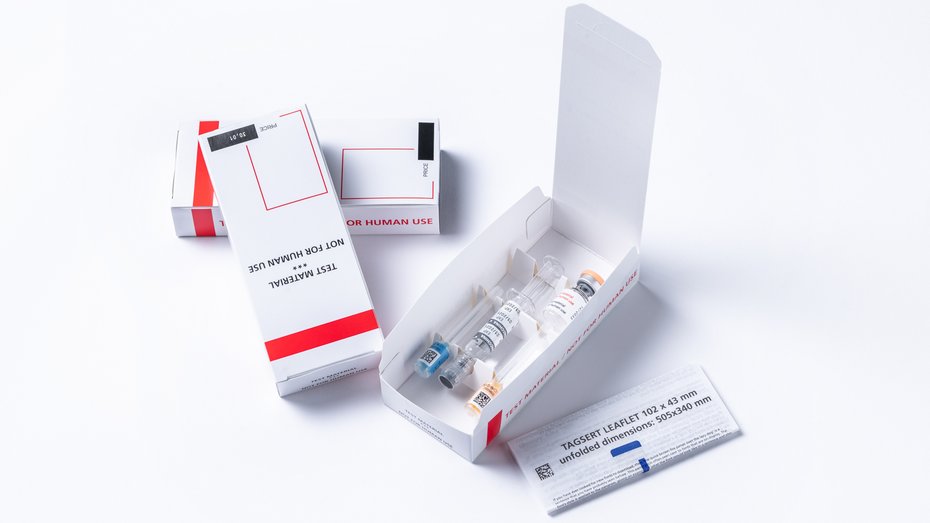
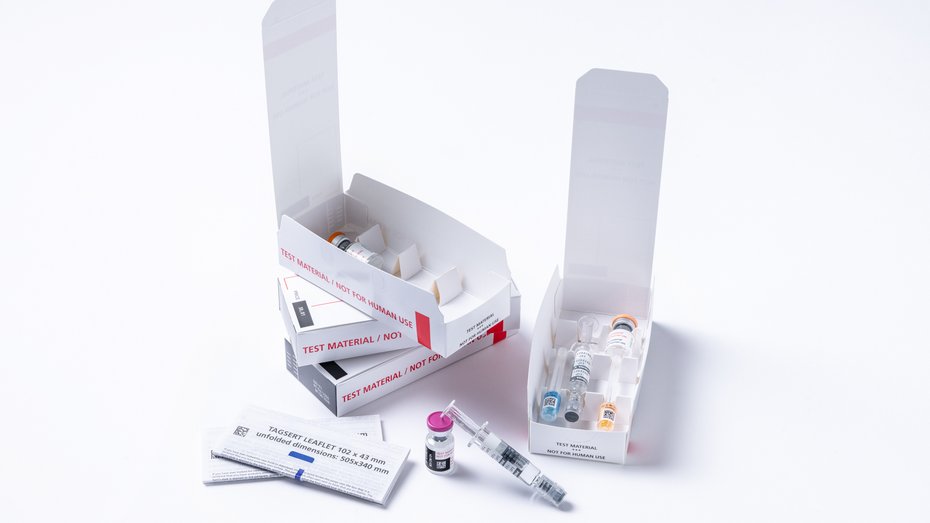
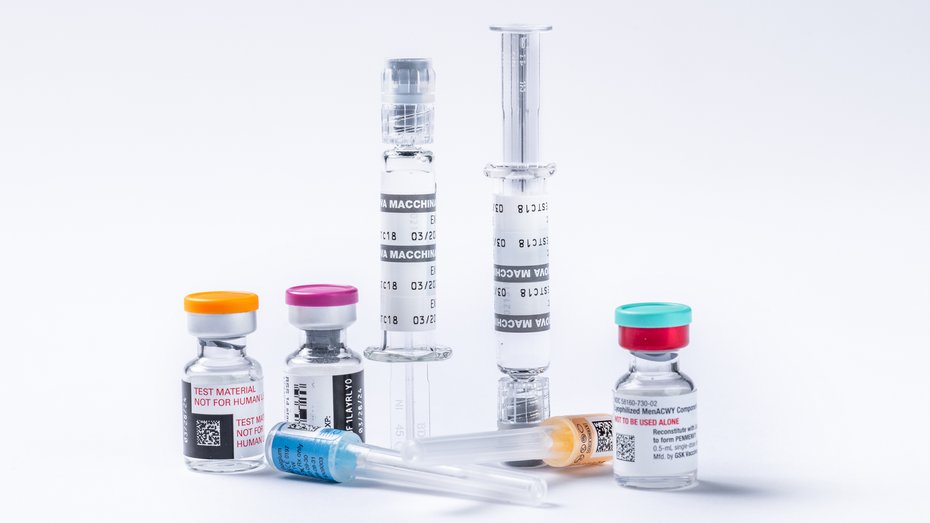
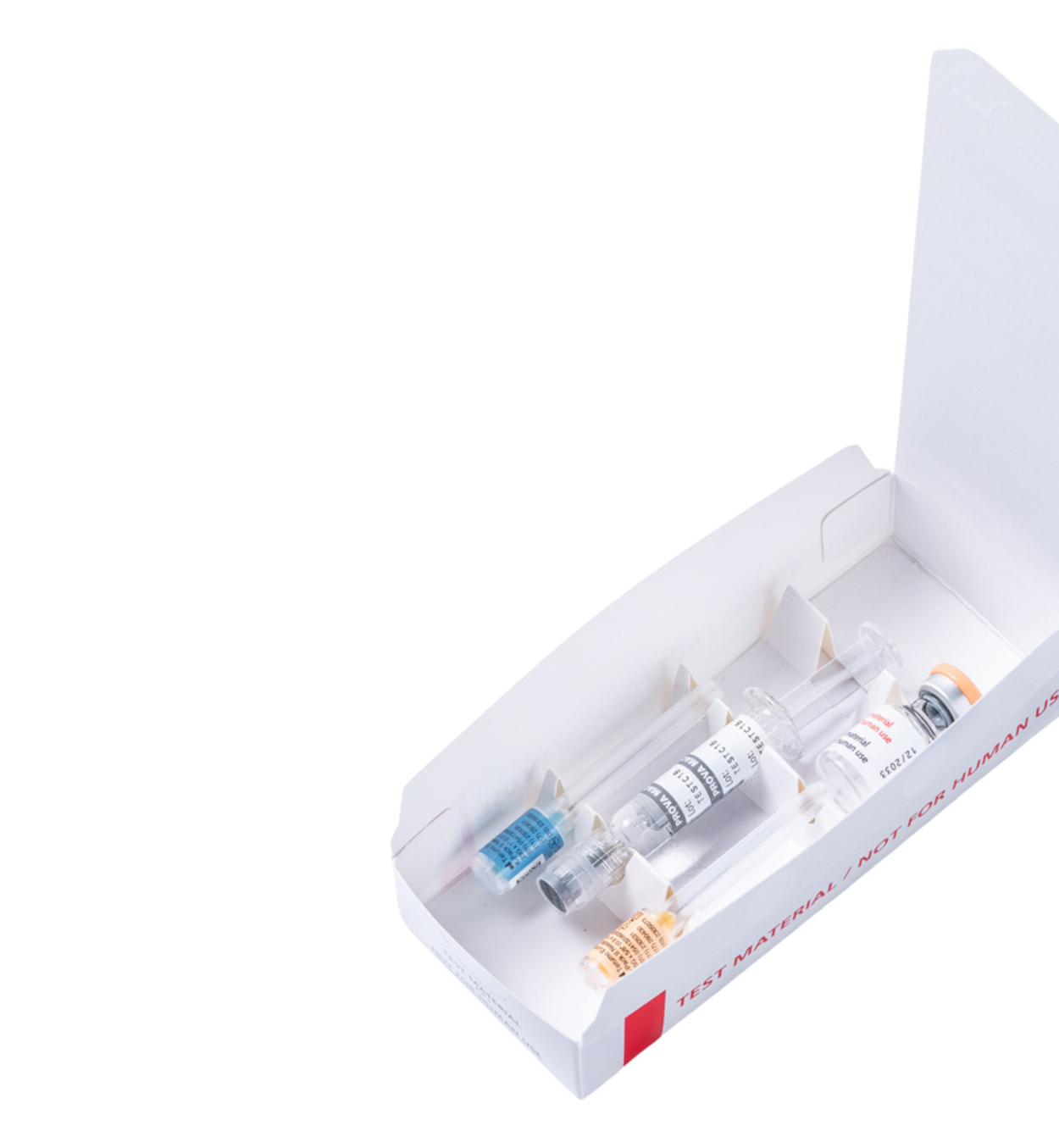
Combination Kits bring together multiple components into a single medical application unit. With Schubert packaging systems, even complex processes for combination products can be implemented flexibly and precisely. Inspection, completeness, and traceability are fully integrated into the workflow.
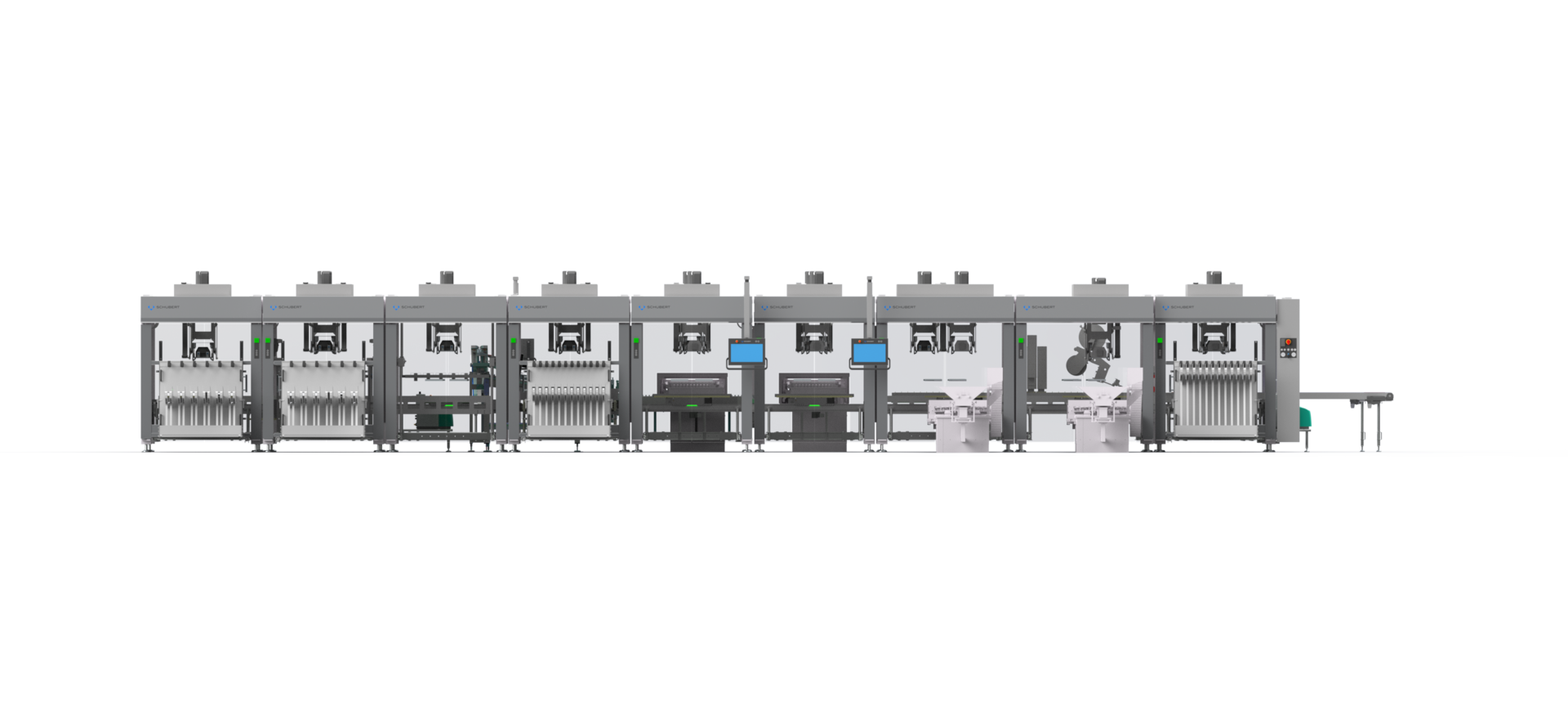
Machine Workflow
1. Infeed: Syringes
1. Infeed: Syringes
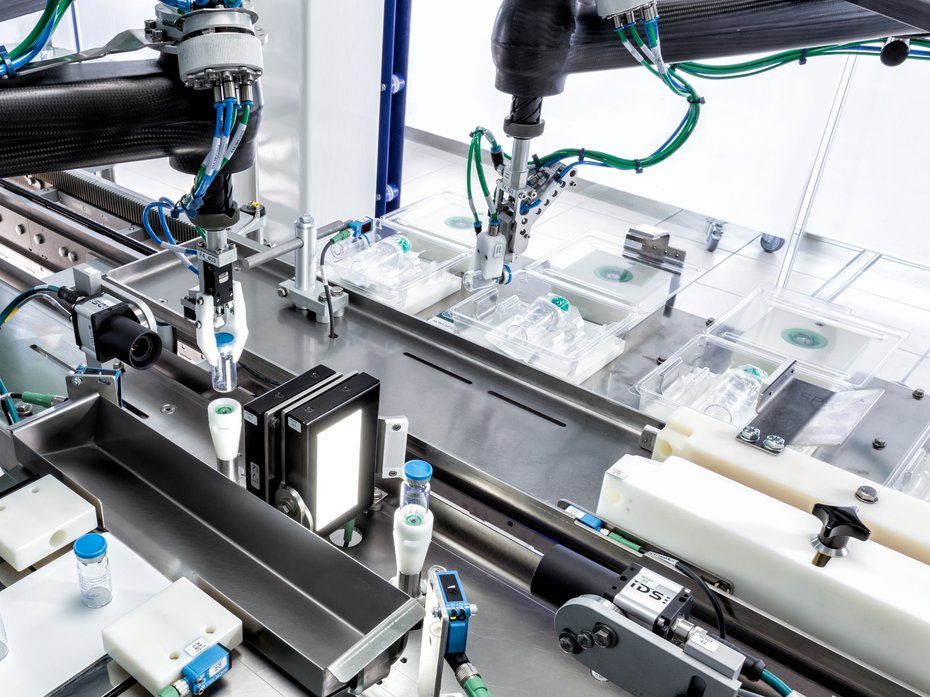
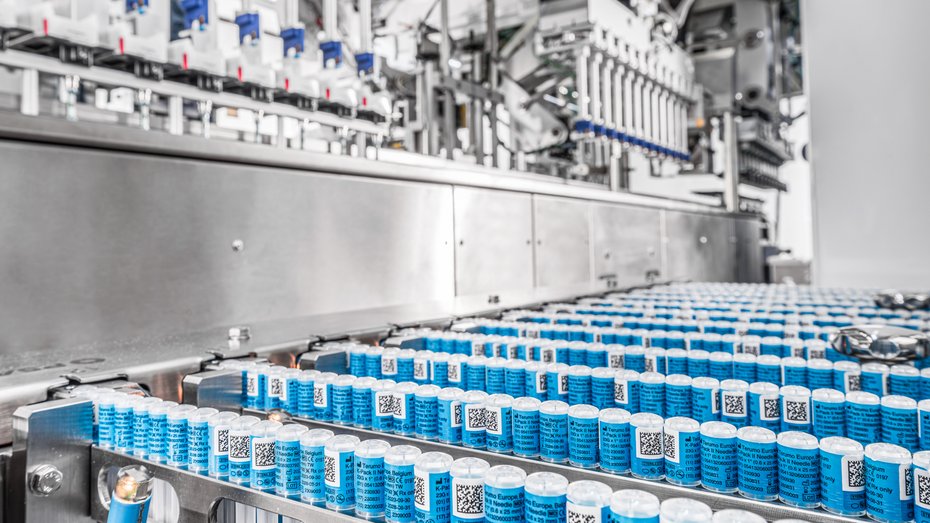
The syringes are placed onto a conveyor belt via a turning wheel and are fed into the system.
2. Infeed: Vials
2. Infeed: Vials
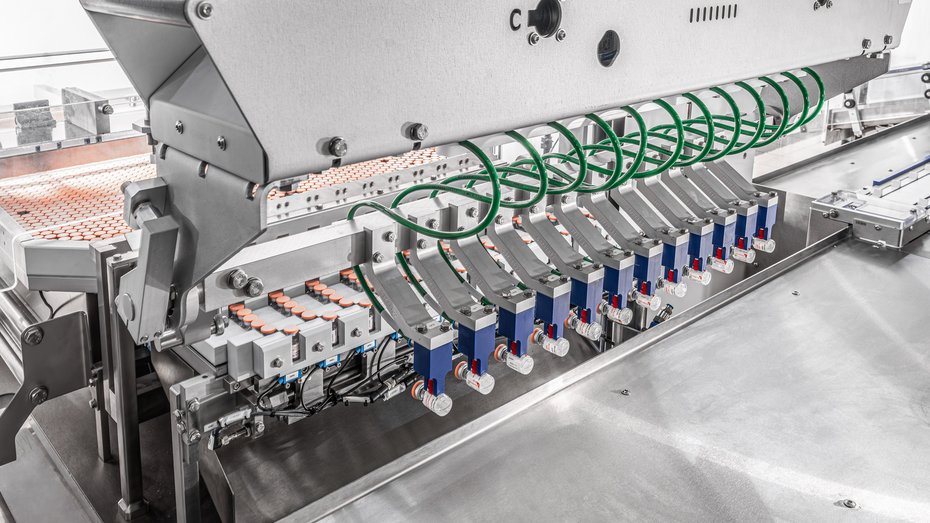
The vials are fed into the system via a vibration table.
3. Infeed: Needles
3. Infeed: Needles
The needles are fed into the system via a vibration table.
4. Forming: Cartons
4. Forming: Cartons
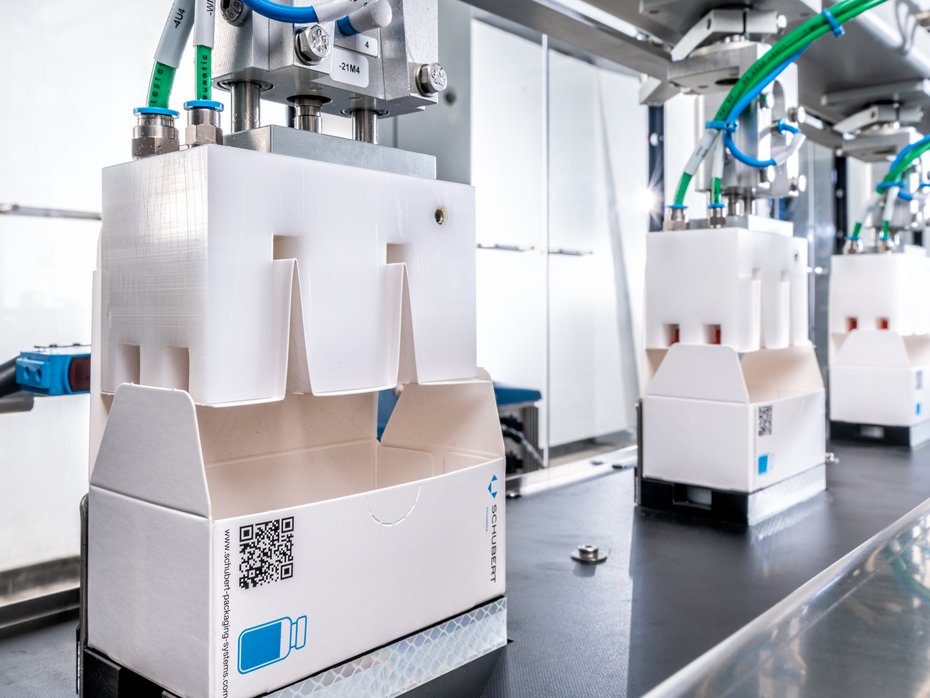
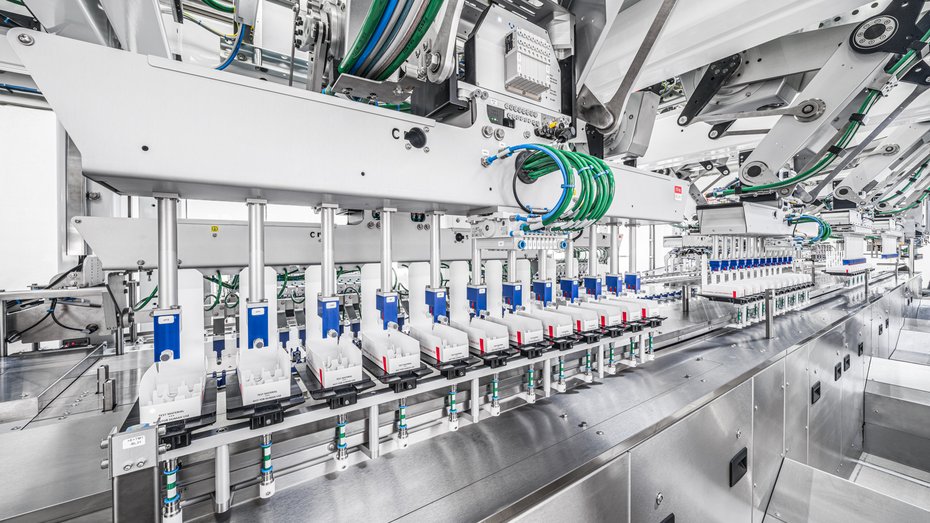
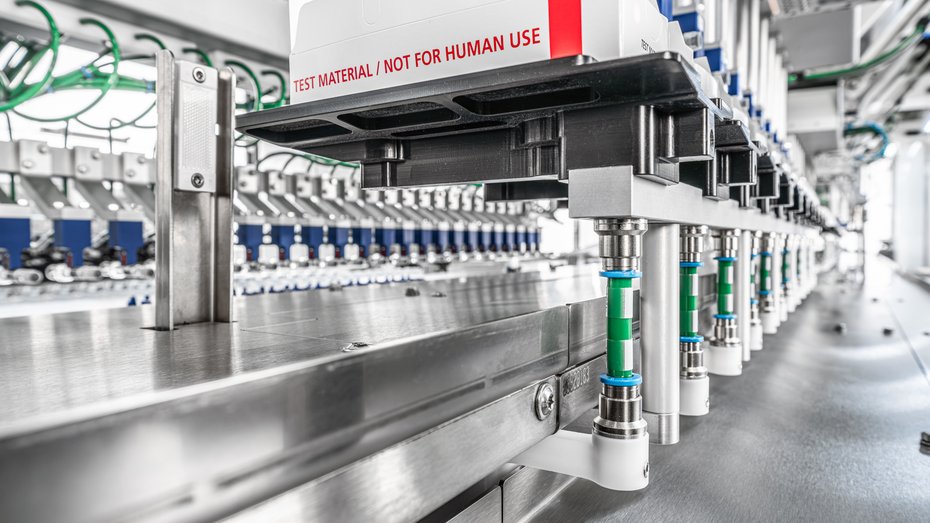
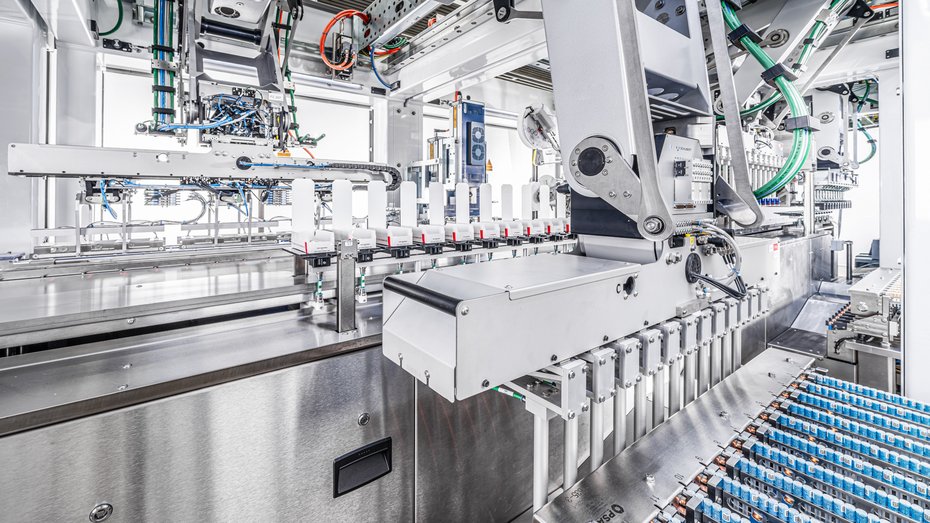
Flat blanks are stored in a 6-lane magazine. The TLM-F3 robot takes the flat blank from the magazine and presents it to the TLM-F2 robot. This robot places the blank onto the vacuum transport system (VT). The VT then moves the blanks under the glue heads, which apply the glue. Afterwards, another TLM-F2 robot takes over the blanks from the VT and presses the flat blank through a folding box. During this process, the carton is formed and placed onto a Transmodul. This process takes place twice in parallel, so that a total of twelve cartons are formed simultaneously.
5. Forming: Partitions
5. Forming: Partitions
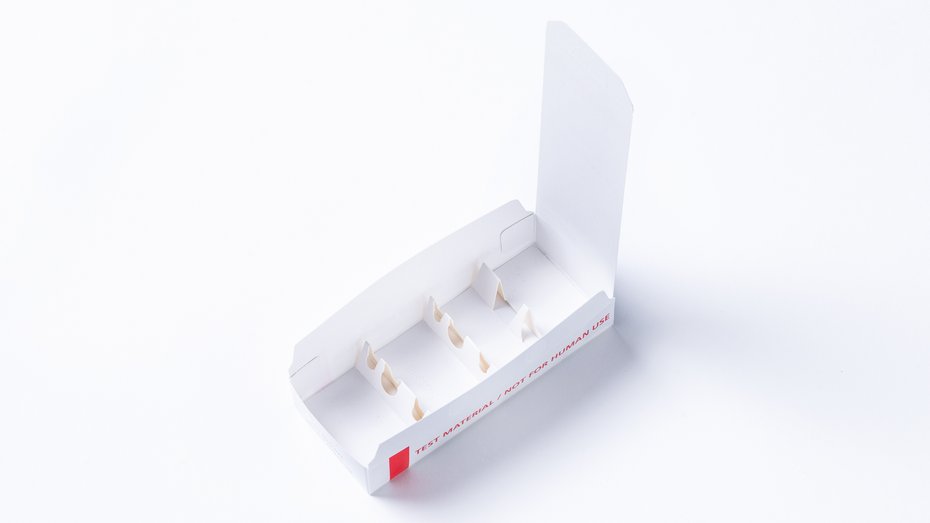
A TLM-F3 robot removes the flat partitions from a magazine and presents them to a TLM-F2 robot. This robot places the blank onto a folding unit, folds it at the appropriate position, and inserts the partition into the formed carton.
6. Loading: Syringes
6. Loading: Syringes
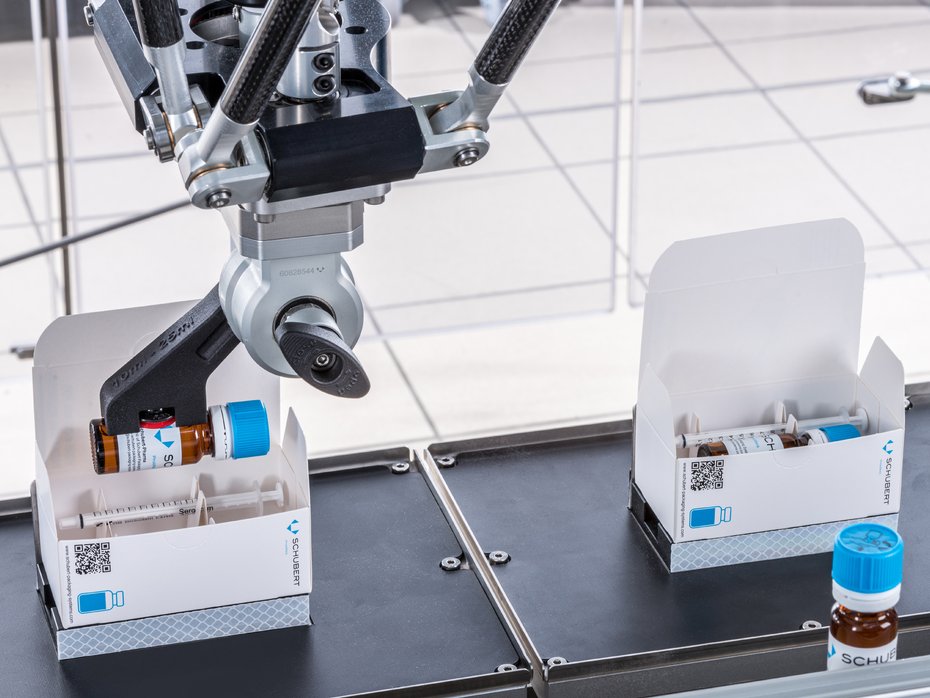
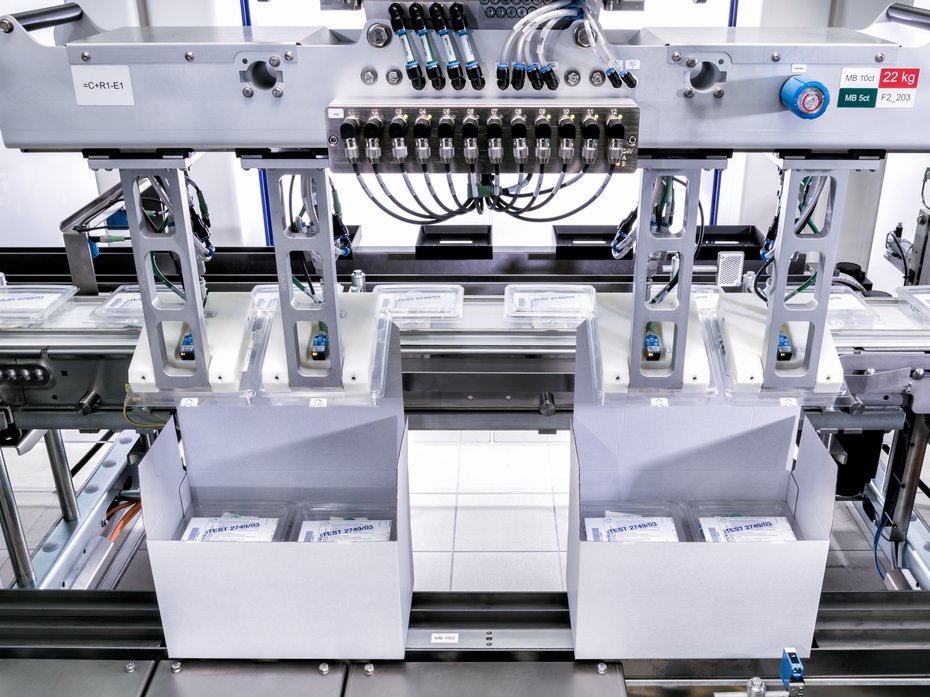
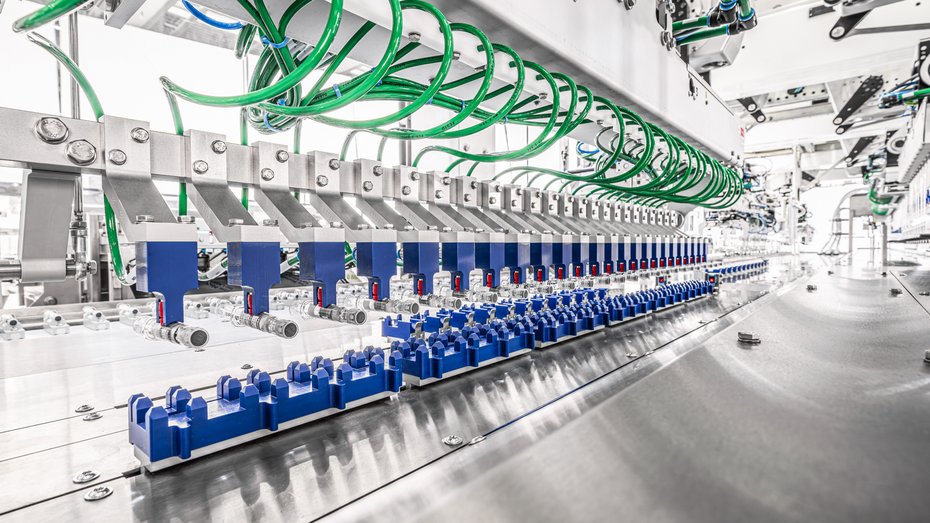
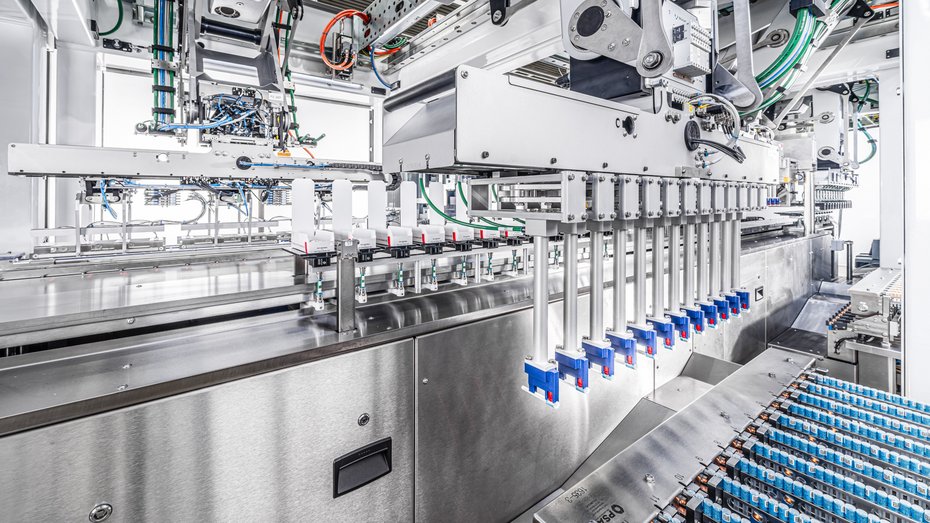
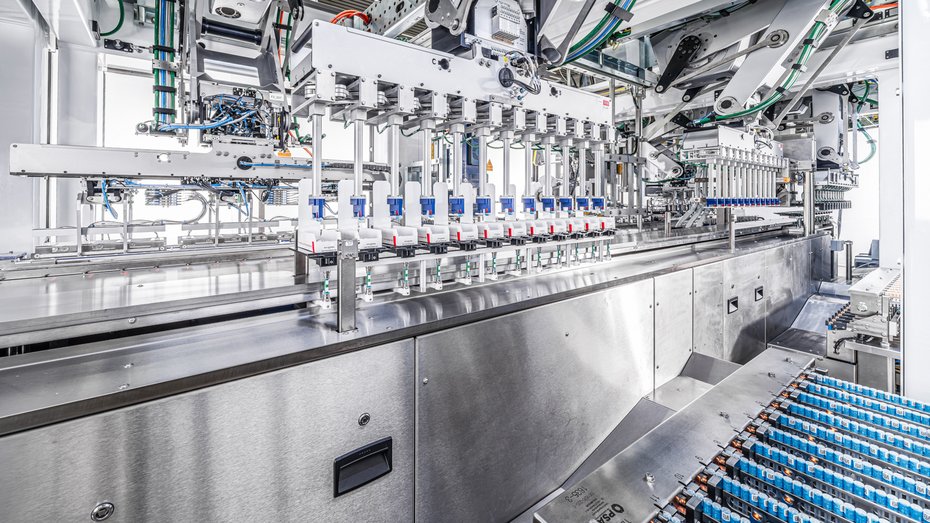
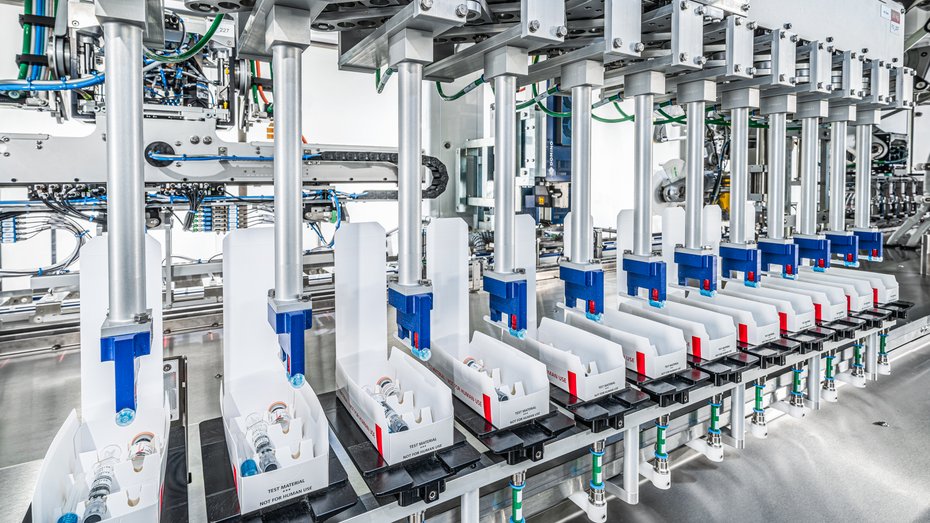
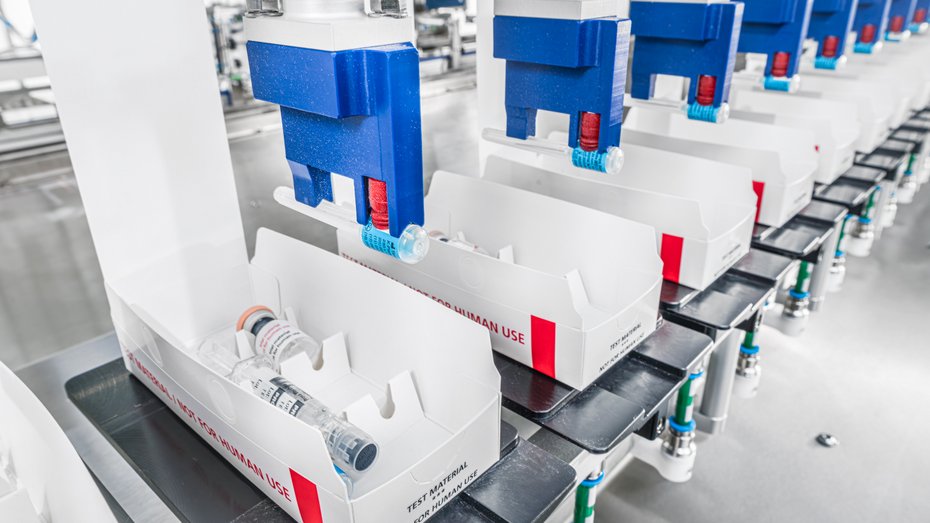
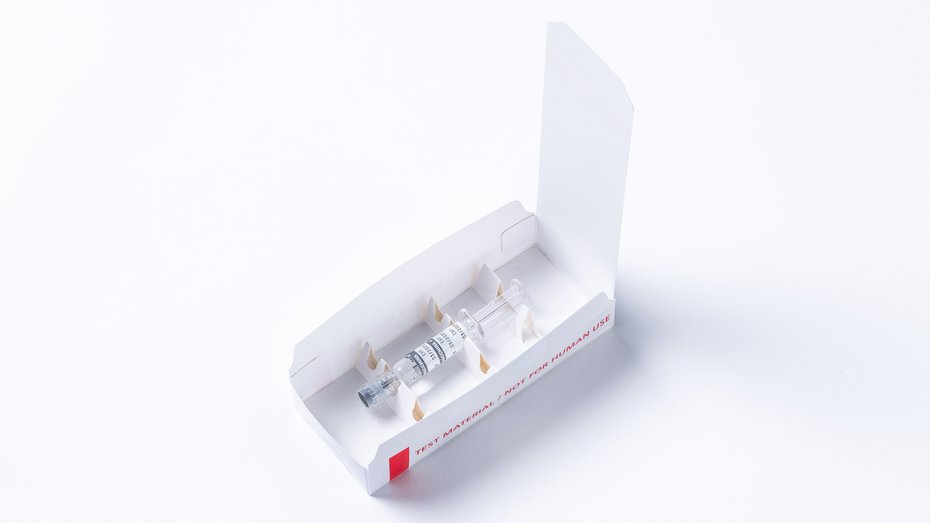
A TLM-F2 robot takes the syringes from the infeed and inserts them into the carton.
7. Loading: Vials
7. Loading: Vials
A TLM-F2 robot takes the vials from the infeed and inserts them into the cartons.
8. Loading: Needles 1+2
8. Loading: Needles 1+2
A TLM-F2 robot takes the needles from the infeed and inserts them into the cartons.
9. Verification: Products
9. Verification: Products
A camera checks the carton once again for completeness. Products that do not meet the specifications are discharged in the next step.
10. Loading: Leaflets
10. Loading: Leaflets
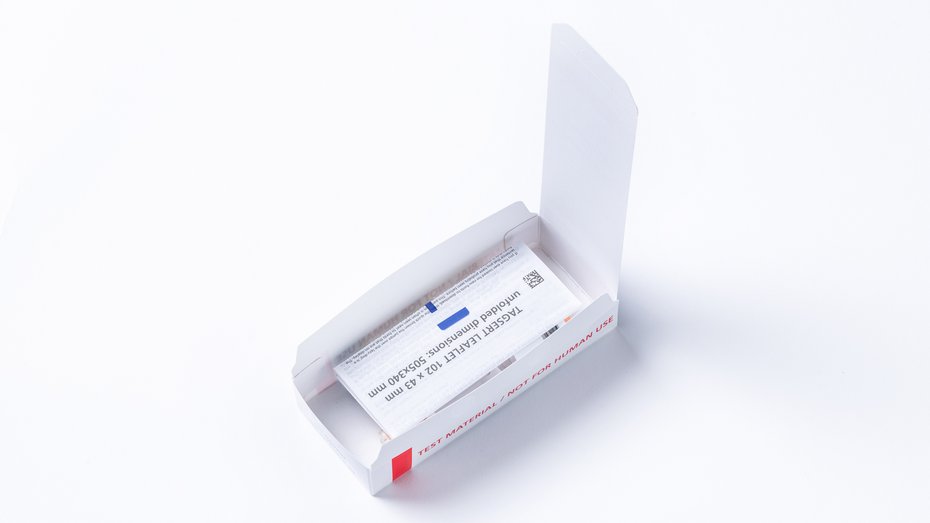
By means of a TLM-F3 robot, the leaflets are removed from a twelve-lane magazine and presented to the TLM-F2 robot. This robot places the leaflets onto the products inside the carton. At the same time, the cartons are transferred to a closing table.
11. Closing: Cartons
11. Closing: Cartons
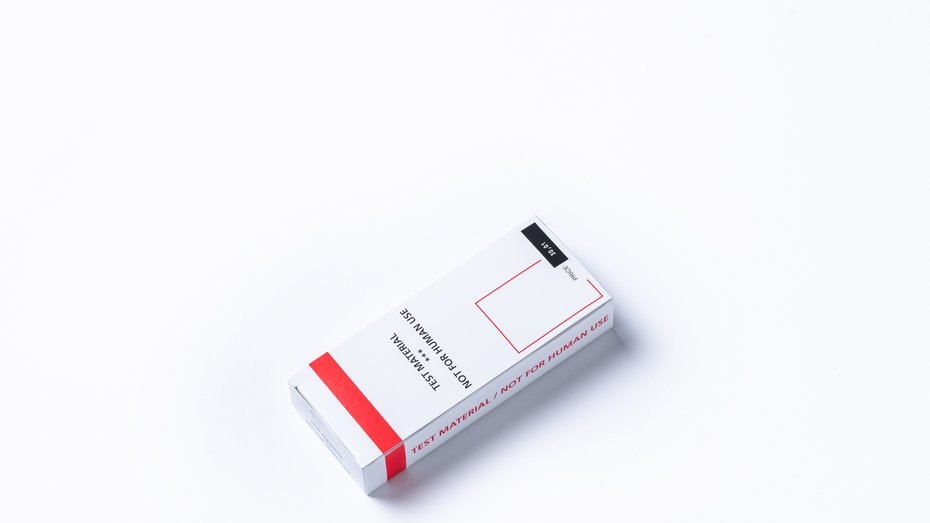
A TLM-F2 robot closes the filled carton and transfers it to a vacuum transport system.
12. Laser: Cartons
12. Laser: Cartons
In the final step, depending on the format, code is lasered onto the carton or a label is applied to it.
13. Discharge: Cartons
13. Discharge: Cartons
The closed carton leaves the machine via a discharge conveyor.
Facts about
Combi Cartoner
From a customer project:
Mixed assortments with up to 3 different products: Syringe, Vial, Needle
11 different formats with different carton designs
Up to 270 products per minute
12 lane carton erecting
Laser coding and labeling for full traceability
Questions about
Combination Packaging?
Contact
Nurdan Aktas
Sales Assistant Pharma
Phone +49 7951 494-20
info@schubert-pharma.com
